
An AI agent is useful when it removes a recurring nuisance without creating extra work. A modest business can often achieve that by improving an existing process rather than building a separate digital department.
Owners can test practical automation without signing an enterprise contract. A first agent can use familiar tools to sort incoming requests, prepare a handover note, identify missing information, or turn a form response into a draft task. The small arrangement gives the team room to learn before it commits to more software.
What should a budget-conscious AI agent do?
A budget-conscious agent should handle preparation, not responsibility. It can gather approved information, classify a request, compare fields, draft text, or suggest the next step. A person should retain control over commitments, payments, permissions, sensitive records, and messages that leave the organisation.
The label matters less than the job. An assistant already built into a familiar application may be all a small team needs for that task. A costly platform is still a poor choice when nobody can describe the process it should improve.
UK government research identifies two common barriers to business AI adoption: an unclear business need and limited AI skills. It also reports that firms often plan to use off-the-shelf applications or AI features already built into familiar tools. [1] A small organisation can take the same practical route. Define one job, test a modest arrangement, and consider a larger platform only if the results show a genuine need.
Put the business problem into numbers
Choose a task that has a recognisable beginning and end. “Improve administration” is too broad. “Prepare a draft response for each new enquiry” is specific enough to investigate.
For five working days, record when the task appears, how long preparation takes, how long checking takes, and what information the person has to retrieve. Note interruptions and handovers as well. A task that takes eight minutes may still be a poor target if it requires searching three systems and breaks a valuable piece of concentration.
Record the downside of an error beside the time. A misplaced internal note may be inconvenient. An incorrect payment reminder, an exposed customer detail, or a promise made without approval carries a different level of risk. The difference will determine how much automation is sensible.
| Measure | Practical question |
|---|---|
| Frequency | How often does the task occur? |
| Preparation | What must a person collect or retype? |
| Review | What does a colleague check before use? |
| Failure | What happens when the result is wrong? |
| Ownership | Who can approve, correct, or stop it? |
Do not calculate savings from preparation time alone. Include review, corrections, maintenance, staff training, and the time spent investigating failures. An agent that produces a draft in seconds but needs a quarter of an hour to repair may be an interesting demonstration rather than a useful investment.

The budget decision begins with the problem and its consequences, not with a product catalogue.
Select a process with a natural boundary
Choose a task with one clear input, a small set of approved sources, and one visible result. A labelled email, a completed form, or a new spreadsheet row can start the process. The agent could then prepare a review note, list missing details, draft a reply, or suggest a task.
Avoid giving the agent a mission such as “run sales” or “look after customers”. Those instructions hide many separate decisions about priority, tone, eligibility, timing, and authority. A smaller brief is easier to measure: “Read new partnership enquiries, identify the sender’s request, and prepare a note for the owner.”
A well-bounded process has a clear stopping point. If the agent fails, people should still be able to find the original input and finish the work manually. That fallback protects continuity; it does not mean the automation has failed.
Choose evidence that a person can check
Keep evidence for each result. A reviewer can compare the draft with the incoming message, check the policy link, or match the date with the source record. If nobody can verify the answer without relying on another uncertain system, keep the process under human control.
Use the tools that are already part of the routine
Start by checking the applications the business already uses. A form may feed a spreadsheet, a shared folder may hold approved documents, and a task board may accept a new card. The business may already have an AI assistant inside a product that staff know how to use.
Familiarity has a hidden value. Colleagues know where to find the original record, how to correct it, and who normally receives the result. They also know which small exceptions matter. A new platform can offer more power while removing that practical knowledge from the process.
Familiar tools also make handover easier. A colleague can take over after a failed run during a holiday, supplier outage, account change, or busy period. A modest arrangement that several people understand may outperform an advanced system that only its creator can repair.
Draw the proposed arrangement on one page. Mark the trigger, the information used, the AI step, the destination, the reviewer, and the manual fallback. If the drawing needs a complicated legend, simplify the first version. The goal is to test the task, not to create an impressive architecture diagram.
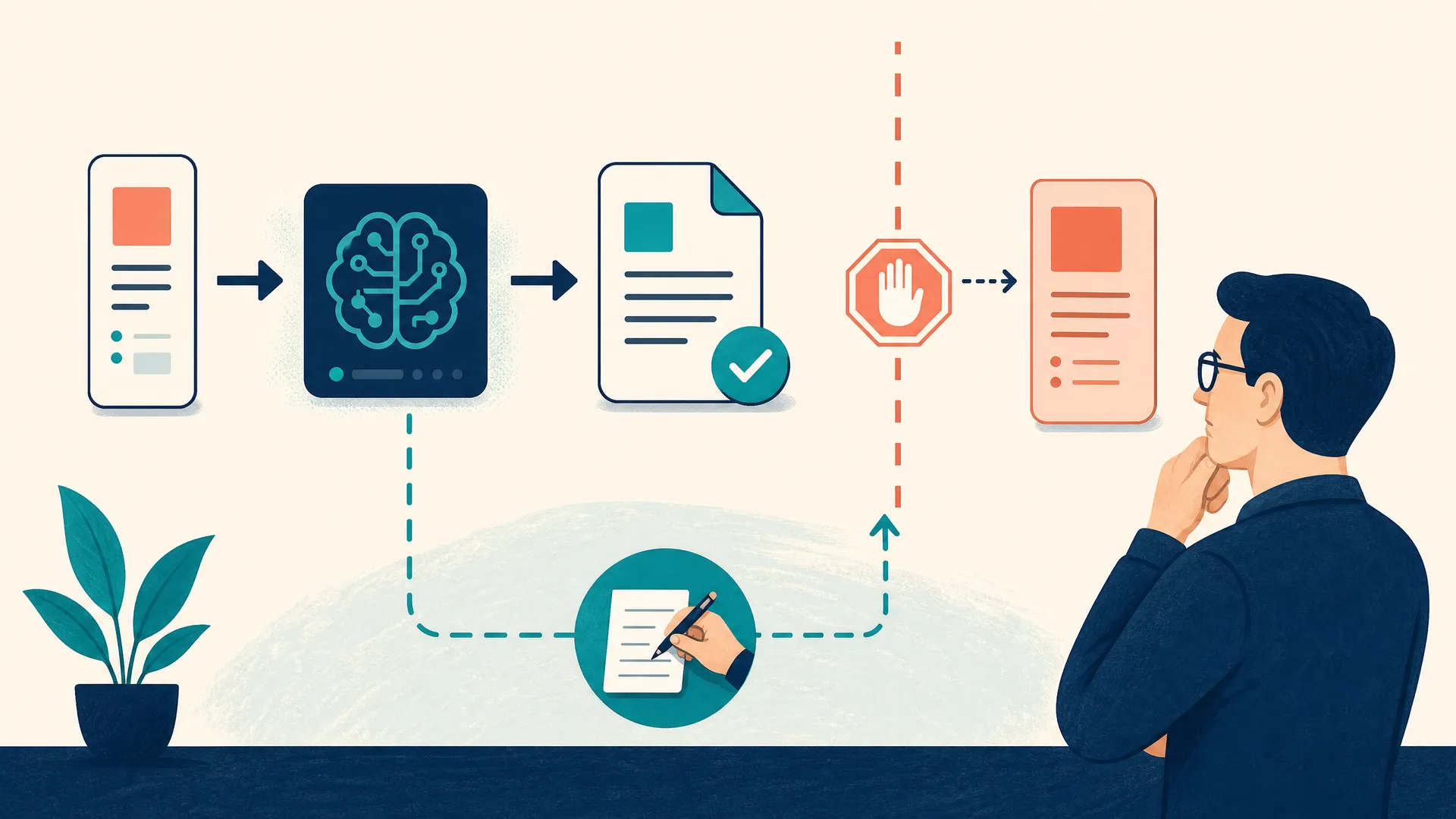
The boundary makes the agent’s limited role visible before another application is connected.
Add connections one at a time. Each link brings another permission, setting, and possible failure. Keep the original arrangement stable before introducing another application.
Buy capability only when the trial exposes a real gap
A hosted service can earn its cost by reducing maintenance, supplying necessary access controls, or handling more work than the team can manage. A self-hosted or open-source component may suit a team that can maintain it or must keep data in a controlled environment. Neither option is automatically cheaper.
Compare the full commitment, not just the advertised price. Check the limits on runs, users, files, connected services, and support. Find out what happens when a limit is reached. A low starting price is poor value if the workflow stops without warning or requires an expensive upgrade before the pilot proves its value.
Maintenance belongs in the same calculation. Someone must update instructions, replace old documents, renew access, inspect failed runs, and answer questions from colleagues. Assign that work to a named owner. “The team will look after it” usually means that nobody has been given enough time to do so.
Set a review date before paying for a longer commitment. A tool that solves a seasonal problem may not deserve a permanent subscription. If the process becomes rare, cancel the connection. A forgotten automation can continue to consume money and attention even when nobody remembers why it was created.
Keep the agent in a preparation role
Write the boundary as a list of permitted and forbidden actions. For instance, the agent may read a new enquiry, search three approved documents, and prepare a reply. It may not send the reply, change the customer record, offer compensation, or disclose information.
Specific limits are easier to test than a general instruction to act responsibly. They also give a reviewer a clear question: did the result stay within the permitted role? If the answer is no, the team can pause the process without debating whether the system was “nearly right”.
NIST presents its AI Risk Management Framework as voluntary guidance for making trustworthiness part of an AI system’s lifecycle. Its approach encourages organisations to assign responsibilities, understand risks, measure results, and manage problems after deployment. That sequence can be scaled down for a small experiment. [2]
Treat information as part of the budget
The cheapest tool becomes a poor choice if it receives far more information than the task requires. Select the documents needed for the job and remove obsolete copies. Keep a record of who maintains important material and when it should be reviewed. If the agent cannot find an answer in the approved sources, it should report the gap.
Personal data needs particular care. Use neutral examples during testing when possible. Before uploading confidential material, check where the provider stores inputs, which suppliers receive them, how long records remain, and how the business can delete them. Do not upload a file to an AI system merely because the tool accepts it.
Create a small source inventory before the trial begins. List each document the agent may use, its purpose, its owner, and its review date. Remove duplicate versions and mark anything that must never enter the workflow. This preparation may feel slower than uploading an entire folder, but it gives the reviewer a clear answer when someone asks where a draft came from.
The UK Information Commissioner’s Office warns that linking data, suppliers, software, and business processes makes security harder to manage. Its guidance recommends tracking where data moves, deleting temporary personal-data files when they are no longer needed, and choosing safeguards that match the processing risk. [3]
Run a small pilot with a written stop rule
Use a limited set of low-risk examples at the beginning. Include ordinary requests, incomplete information, unusual wording, and cases that should be refused. Compare the output with the method a person normally uses. Record corrections in plain language instead of judging the system by its most polished answer.
During the second stage, allow the agent to prepare drafts for new cases. Track how long preparation and review take, which details are missed, how often corrections are needed, how many runs fail, and when a person must take over. Keep a few early examples for comparison. That makes it easier to see whether the instructions improved the work or merely changed its appearance.
Ask reviewers to explain corrections in a few words. “Wrong date”, “missing source”, and “tone too strong” create more useful evidence than a general complaint that the draft feels poor. Those notes can guide a later change to the instructions or the approved material. They also keep later comparisons grounded in useful evidence.
End the pilot with a written decision. Continue when the benefit is clear, and the owner can maintain the arrangement. Keep only the reliable part when the full job is too broad. Stop when the output remains uncertain, the permissions feel excessive, or nobody can take responsibility.
Keep the evidence with the pilot notes. Save a few representative inputs, the resulting drafts, the reviewer corrections, and the reason for the final decision. This record prevents the business from restarting the same experiment months later without remembering what went wrong. It also gives a future supplier a clearer brief if the team eventually needs more capability.
When should a cheap tool be rejected?
Price should not decide a project that handles sensitive information, irreversible actions, or regulated judgements. A free service may lack the access controls, audit records, support, or contractual terms that the work requires. Buying the most expensive platform is not the only alternative. Keeping the task manual may be safer.
Pause before automating decisions about payments, recruitment, medical matters, legal obligations, account deletion, or confidential customer information. An agent may gather facts and prepare questions, but an appropriately qualified person should decide what happens next.
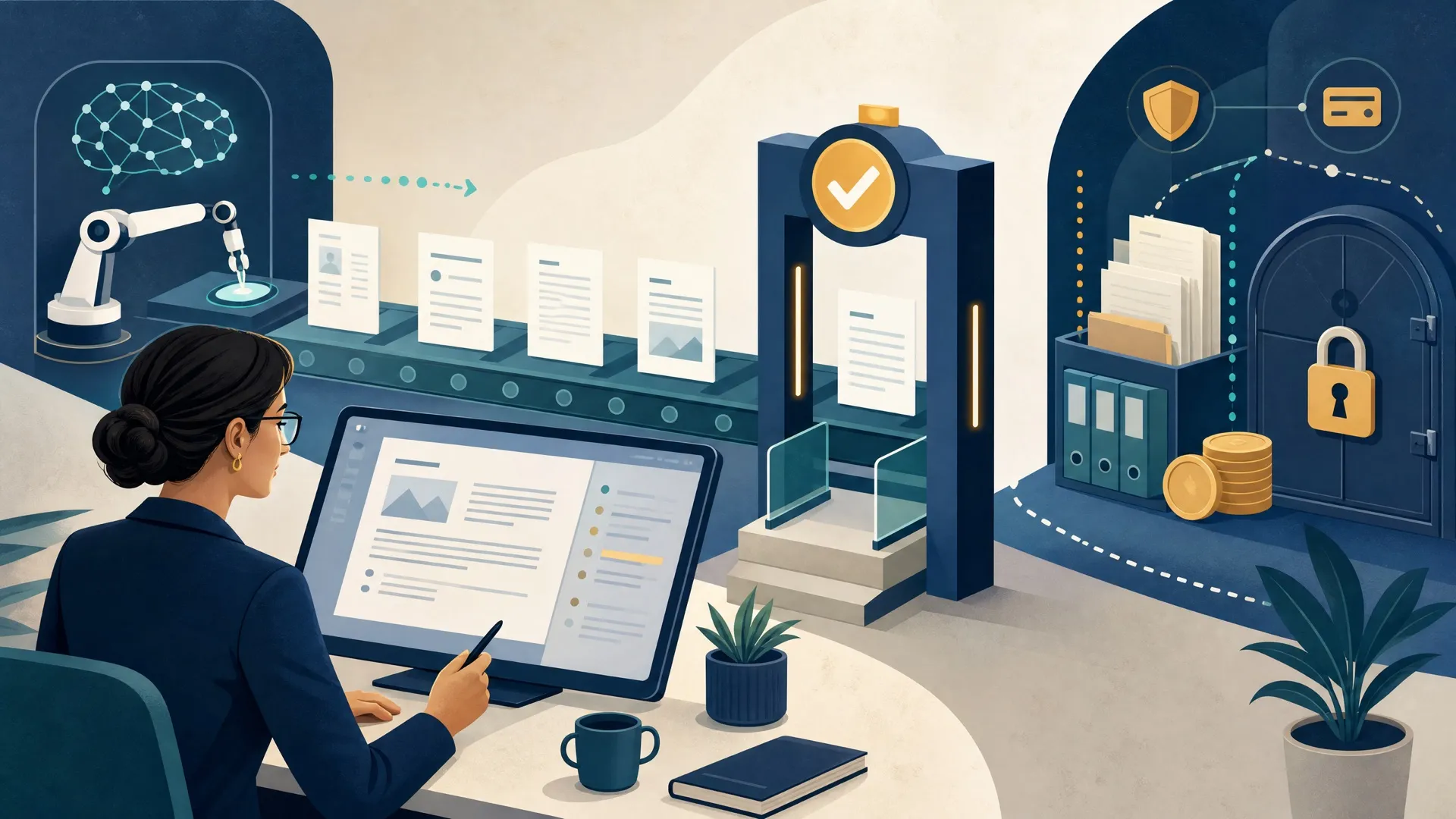
The checkpoint keeps sensitive decisions with a person while the agent remains responsible only for preparation.
A small experiment should produce knowledge
The first agent does not have to settle the company’s long-term platform choice. It only needs to show whether one defined task can improve without creating hidden work. The trial should reveal how the source material, instructions, review burden, and system limits affect the result.
When the result is promising, expand one boundary at a time. Add another category, document set, or destination only after the existing version remains easy to inspect. Keep the manual route available until the automated route has earned trust.
Stopping can be the most economical decision. A person may be cheaper and safer when the task is rare, the information is sensitive, or the result is difficult to verify. Automation earns its place when it reduces a measured burden and keeps responsibility visible.